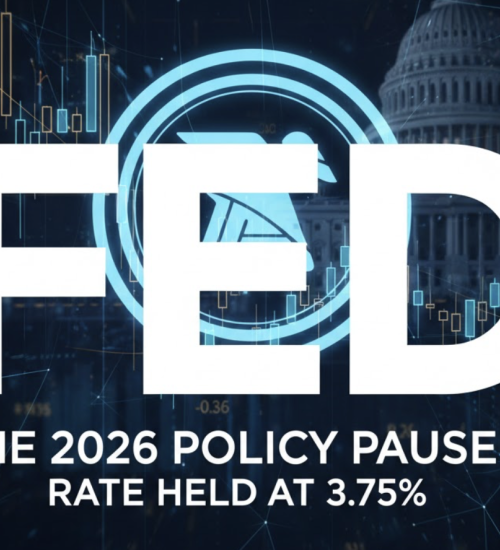
Title: The 2026 Fed Pause: Why Jerome Powell is Holding the Line at 3.75%
29 stycznia 2026

As we stand on the threshold of 2026, the global economic landscape is undergoing a profound transformation. The traditional metrics of corporate success—once dominated purely by quarterly earnings and market share—have been replaced by a more complex and holistic set of criteria. Today, the ESG (Environmental, Social, and Governance) imperative is no longer a peripheral concern for corporate social responsibility departments; it has become the primary lens through which global capital evaluates long-term viability and risk. For institutional investors, from the sovereign wealth funds of the Middle East to the pension giants of Europe, ESG compliance is now a non-negotiable prerequisite for entry.
The Green Shift: Decarbonization as a Competitive Advantage The environmental component of ESG has moved beyond mere carbon offsetting. In 2026, the focus has shifted toward deep decarbonization and the circular economy. Companies that have successfully integrated sustainable energy sources and waste-reduction protocols into their core operations are not just "doing good"—they are optimizing their cost structures and securing their supply chains against future volatility. In regions like the UAE and Saudi Arabia, where massive investments are being funneled into green hydrogen and solar infrastructure, the alignment of private tech ventures with national sustainability goals is creating a new class of high-valuation "green unicorns."
Social Responsibility and the Future of Talent The "Social" element of the triad has evolved to encompass the entire human ecosystem of a company. In 2026, social responsibility means more than community outreach; it signifies a commitment to data privacy, ethical AI, and the well-being of a global, often remote, workforce. For technology-driven enterprises, how they handle user data and protect individual digital rights is now a critical social metric. This shift reflects a broader societal demand for transparency and accountability. Companies that prioritize ethical interactions—both with their employees and their customers—are seeing higher retention rates and significantly stronger brand loyalty, which directly translates into lower operational risk.
Governance: The Bedrock of Institutional Trust Governance remains the most critical, yet often overlooked, pillar of ESG. In an increasingly complex legal environment, transparent governance structures are the bedrock of institutional trust. This includes the clear ownership of intellectual property, ethical board oversight, and a robust approach to regulatory compliance. For investors in 2026, a "governance gap"—such as disputed assets or opaque decision-making processes—is a terminal red flag. The market is rewarding those who have built their organizations on a foundation of legal clarity and sovereign control over their digital identities and strategic assets.
Conclusion The ESG movement of 2026 represents the most significant shift in capital allocation in a generation. It is a movement from short-termism toward sustainable, long-term value creation. As we look ahead, it is clear that the winners in this new economy will be the organizations that view ESG not as a regulatory burden, but as a strategic opportunity to build trust, foster innovation, and secure their place in a more conscious and resilient global market.